
December 2024
Spanish classes for primary school children
Designing and teaching a 5 x 45-minute Spanish course for group 8+ pupils —that was the challenge given to me by the group 8 teachers of OBS Brinkschool in Haren. For this task, I stepped back into my role as a Spanish teacher after a long time. I created the method Aprender español en 5 x 45 minutos. Each week revolved around a different theme: Presentarse (Introducing yourself), La rutina diaria (Daily routine), La playa (The beach), Los deportes (Sports), and El restaurante (The restaurant). Also, we learned about Spain and Latin America. For example, we explored the geography of Spain through its La Liga football clubs. The kids studied weekly vocabulary and verbs, and also created a Spanish comic strip about themselves. Last but not least, they presented their favourite sport or vacation using Powerpoint slides.


2019-2020
Development and implementation of Professional Product
In my role as a research coordinator of our BA programme Leisure & Events Management, I was involved in the development and implementation of the Professional Product component. Besides writing an academic thesis, since academic year 2020-2021 students have the opportunity to deliver a professional product as graduation project, such as an event, a concept development or a business plan. Similar to a traditional thesis, a professional product is developed based on applied research. Moreover, students are encouraged to develop a professional product for a client in the field. As such, students both develop their research skills and contribute to their future work field.
One of the students from the first group to deliver a Professional Product conducted research on Sweden’s tourism sector. She also applied Design Thinking to develop an innovative concept that outlines her future business plans. Take a look at her LinkedIn post to read about her experience with Professional Product:

2018-2019
Project Flavors of Málaga in cooperation with TUI Care Foundation
Together with my colleagues and students of the Hospitality Business school of Saxion University of Applied Sciences, and in collaboration with the TUI Care Foundation and the Municipality of Málaga (Spain), I helped a group of women from a disadvantaged neighborhood in Málaga to set up their own sustainable gastronomic business. All activities are surrounded around the tipical Spanish corralones, beautifully decorated patios. See also the website:
https://www.tuicarefoundation.com/en/programmes/economic-development/malaga-kitchen-sink-entrepreneurs

https://www.tuicarefoundation.com/en/newsroom/news-en/2019/german-consul-gets-a-taste-of-flavours-of-malaga

2013-2014
Hospitality Excellence Programme
On behalf of the Hotel Management Programme of Saxion University of Applied Sciences, I participated several years as a coach in The Hospitality Excellence Programme: a co-creation between the five high-level hotel schools in the Netherlands, Koninklijke Horeca Nederland and NBTC-Holland Marketing. In this programme, the most excellent students work together with lecturers and researchers on solutions for various challenges in the Dutch hospitality industry, using Design Thinking as a research approach. In 2014, I was particularly involved in a project about how to increase the experience of hospitality through intercultural communication. In the video below, one of the students talks about the challenge of her group (in Dutch only).

2013
Interview PhD Project The Language of Hospitality
At the start of my PhD project, I was interviewed by the University of Groningen about my project and the cooperation between the University of Groningen and Saxion University of Applied Sciences:
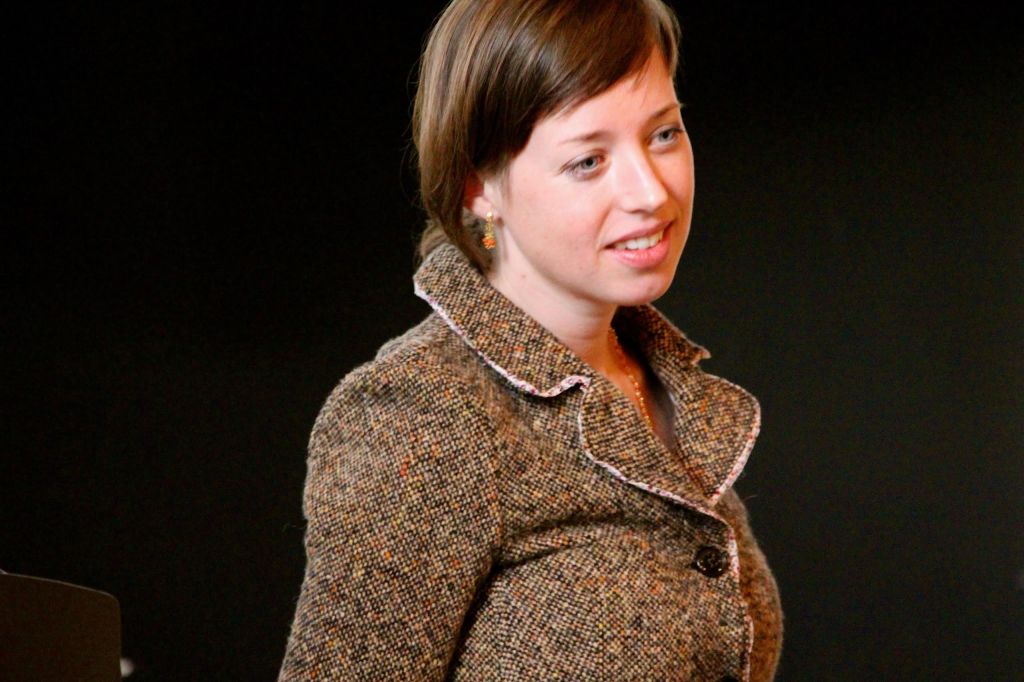
“My employer’s suggestion to perform research on hospitality in language, was very welcome”
Leanne Schreurs teaches Spanish at the Hospitality Business School of Hogeschool Saxion, but she is also doing her PhD-project at the Faculty of Arts. Her employer Saxion is paying for her to do research on the field of hospitality in language. Hospitality is an important issue in hotels and restaurants, but is important to language education, daily life and research as well. When are we considered to act customer friendly and how is this reflected in what we say? More information (in Dutch):
https://www.rug.nl/let/onze-faculteit/letteren-en-samenleving/mogelijkheden/taal-en-gastvrijheid

2011-2012
Project Hospitality, Brains, and Learning
This project was a cooperation between Centrum Brein & Leren of Vrije Universiteit Amsterdam and the Hospitality Business School of Saxion University of Applied Sciences. In this project, first year students and their neuropsychological development played a key role. Together with a group of colleagues, I participated as a researcher in this project. Our point of departure was the insight that neuropsychological development continues until (far) after the twentieth year. We specifically focused on the written communication between university staff and students. We used usability testing as a research technique in order to investigate to what extent students were able to find all the necessary information to run smoothly through their study programme. 
2006-2009
Inheritance Colombian author Tomás Carrasquilla (1858-1940)
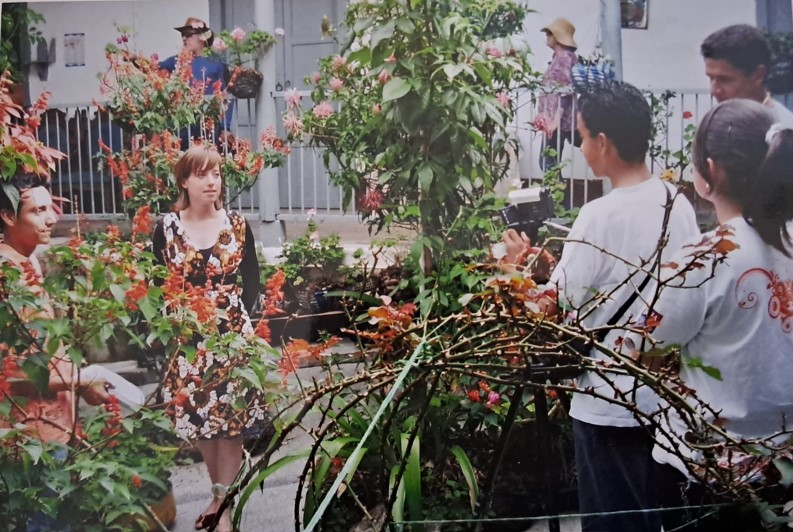
While doing my final internship at a steel wire company in Barcelona in 2006, I coincidentally met the close relatives of the Colombian author central to my Master thesis, Tomás Carrasquilla. This encounter had great impact. Besides having the opportunity to organise the author’s inheritance, they warmly welcomed me, and later my husband and our children, into their family. In 2009, I was invited to Carrasquilla’s home town Santo Domingo, nearby Medellín, to attend the opening of his library-museum. As a researcher using Carrasquilla’s work and coming all the way from Europe, I was interviewed by the local press in a stunning surrounding full of flowers in midst of the mountains.
 Leanne Schreurs